Key Takeaways
Start with the biggest sources of plastic waste. Cups, lids, straws, cutlery, and takeaway containers usually make up the majority of a coffee shop's disposable packaging.
Always choose the right materials, not just "plastic-free" products. Paper, molded fiber, bagasse, bamboo, and certified compostable products each have different strengths.
Think beyond packaging. Customer incentives, waste sorting, reusable cup programs, and bulk purchasing all contribute to a more sustainable operation.
Even small changes can add up. Replacing a handful of high-volume disposable items can significantly reduce your shop's environmental footprint while helping to enforce your brand values.
How to Build a Plastic-Free Coffee Shop: A Practical Guide for Modern Cafés
Whether you're opening a new café or looking to make your existing coffee shop more sustainable, reducing plastic isn't just good for the environment, it's actually becoming an expectation from customers. This is where eco-friendly coffee shop supplies coming into play.
The good news? Going plastic-free doesn't mean sacrificing convenience or functionality. From compostable cups and fiber lids to reusable programs and smarter purchasing decisions, today's coffee shops have more sustainable options than ever before.
Why More Coffee Shops Are Reducing Plastic
Sustainability has become an important purchasing factor for many consumers, and coffee shops are uniquely positioned to make noticeable improvements without much heavy lifting.
Consider these statistics:
Containers and packaging account for more than 82 million tons of municipal solid waste in the United States, representing roughly 28% of all waste generated.
The EPA identifies reusable food service ware as the preferred environmental option, followed by certified commercially compostable products.
One reusable cup or mug can replace hundreds of disposable cups over its lifetime, making even low or modest customer participation extremely meaningful.
For coffee shops, reducing plastic isn't simply about replacing one cup with another - it's more about creating a system that minimizes waste while also maintaining efficiency.
Outlined below are 6 simple steps a coffee shop can take to help create a more sustainable operation and become a zero waste coffee shop.
Step 1: Replace Single-Use Plastic Drinkware
As one might suspect, disposable drinkware is often the largest contributor to plastic waste.
It is not very difficult to look for alternatives including:
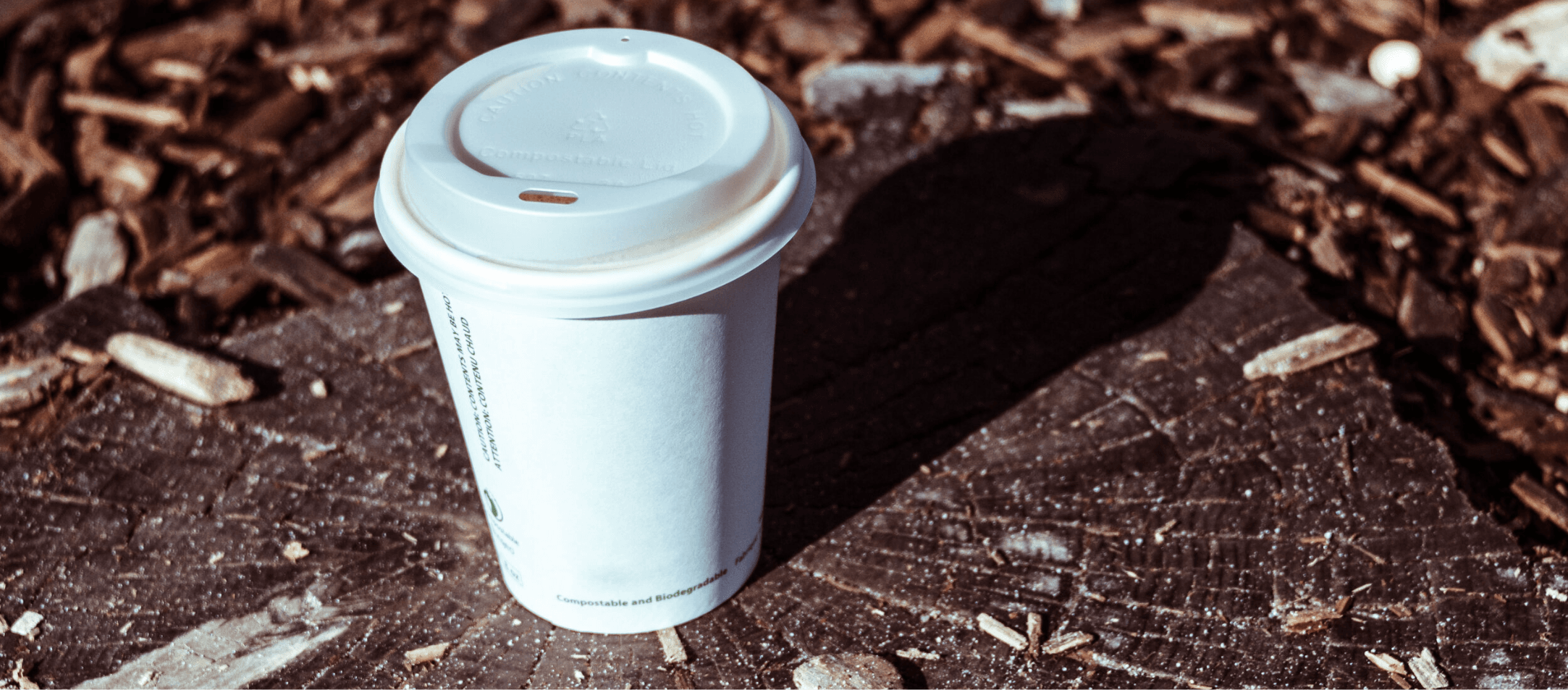
PLA-lined compostable cups (where commercial composting is available)
Compostable or fiber lids
Wooden stir sticks
If your municipality happens to support commercial composting, certified compostable products can help divert waste from landfills. However, it's important to verify that local composting facilities actually accept food service packaging before making the switch and ordering products.
Step 2: Eliminate Plastic Accessories
Many cafés make the mistake of only focusing on cups but often overlook smaller disposable items that are used daily by both employees and customers.
Consider replacing the following items:
Plastic straws
Plastic stirrers
Plastic cutlery
Portion cups
Condiment containers
With more sustainable alternatives such as:
Birchwood cutlery
Paper straws
Compostable utensils
These products don’t disrupt a customer’s experience while also reducing your reliance on petroleum-based plastics.
Step 3: Upgrade Your Food Packaging
If your café serves pastries, muffins, breakfast sandwiches, salads, or grab-and-go lunches, food packaging is another great opportunity to reduce plastic throughout the entire day of operation.
Choose packaging based on the food you're serving. Hot, greasy foods require different materials than baked goods or refrigerated items.
Breakfast sandwiches, paninis, hot pastries, and other prepared foods require packaging that can handle heat, oils, and moisture without breaking down. If your coffee shop serves these items, you should consider:
Bagasse food containers: A durable, compostable option that handles hot foods well and provides insulation.
Molded fiber trays & containers: Designed for strength and durability, these containers help prevent leaks while keeping food protected during transport.
Kraft paperboard boxes: A good choice for baked goods and sandwiches when ventilation and presentation are important.
Muffins, cookies, pastries, and bakery items often require packaging that protects appearance while allowing customers to see the product. One could consider: Kraft bakery bags: Ideal for cookies, croissants, muffins, and pastries that customers consume quickly.
Paperboard pastry boxes: Provide structure and protect delicate baked goods during transport.
Window bakery boxes: Allow customers to see the product while reducing the need for plastic packaging.
Step 4: Encourage Reusable Cups (& Make It Easy)
While sustainable disposable cups is a great improvement, reusable drinkware remains the most environmentally friendly option.
Ways to encourage participation include:
Offering discounts for bringing reusable mugs
Selling branded reusable tumblers
Creating loyalty rewards
Promoting dine-in ceramic mugs
Some cafés have found reusable programs can also reduce long-term purchasing costs while strengthening customer loyalty.
Step 5: Make Waste Disposal Easy
Even the best sustainable packaging won't have its intended impact if customers and employees don't know where it belongs once they are done using it.
Help customers and employees by:
Clearly labeling recycling, compost, and landfill bins
Training employees on proper waste sorting
Using consistent packaging materials to reduce contamination
Posting simple disposal signage
The EPA notes that compostable products should not be placed in standard recycling streams because they can contaminate recyclable materials.
Step 6: Buy Smarter, Not Just Greener
Building a plastic-free and more sustainable coffee shop isn't about replacing every product overnight. You can take it slowly and make sure your decisions align with your overall goals.
Instead:
Identify your highest-volume disposable items
Prioritize products customers interact with most
Purchase in bulk when practical, but test the products before doing so
Standardize packaging sizes to simplify inventory - only buy what you actually use
This phased approach makes sustainability goals less stressful, more manageable and attainable while also helping control operating costs (and improving your bottom line).
Common Mistakes to Avoid
Avoid these common mistakes when building a more sustainable packaging program:
Assuming "compostable" means it can go anywhere
Many compostable products require commercial composting facilities and should never be placed in traditional recycling bins. Sustainability doesn't stop at the product purchase. A compostable cup only creates an environmental benefit when it is disposed of correctly.
Mixing too many packaging materials
A common mistake businesses make when transitioning away from plastic is introducing too many different packaging materials at once. While each item may serve a purpose, a wide variety of materials can make inventory management and waste sorting more complicated. A simpler system is easier for employees to follow and makes it easier for customers to make the right disposal choice.
Forgetting customer education
Even the most sustainable packaging program will fall short if customers don't understand the changes being made.
Many may not know the difference between compostable, recyclable, and traditional packaging. Without clear guidance and proper signage, compostable items may end up in the trash or recycling bins, eliminating their environmental impact.
Prioritizing Sustainability Claims Over Real-World Performance
Another common mistake is choosing packaging based only on labels like "eco-friendly" or "green" without considering whether it performs well for daily operations. A container that fails during use can lead to wasted food, frustrated customers, and increased costs.
Building a More Sustainable Coffee Shop, One Step at a Time
Creating a plastic-free coffee shop doesn't happen overnight, but every small improvement can make a meaningful impact over time. The goal isn't necessarily to replace every item immediately, it’s about making thoughtful and strategic changes that reduce waste while still supporting the needs of your employees, customers, and daily operations. Over time, small operational changes add up. A more sustainable packaging strategy can help reduce waste, improve efficiency, strengthen your brand reputation, while also creating a better experience for environmentally conscious customers who want to support businesses that share their values.
Building a plastic-free coffee shop is a journey that must be embraced and understood by everyone not a single decision. By making intentional choices, educating your team and customers, and continuously improving your approach, you can take meaningful steps toward a more sustainable future.
Sources
1- U.S. Environmental Protection Agency (EPA) — Containers and Packaging: Product-Specific Data, https://www.epa.gov/facts-and-figures-about-materials-waste-and-recycling/containers-and-packaging-product-specific
2- U.S. Environmental Protection Agency (EPA) — Identifying Sustainable Food Service,https://www.epa.gov/greenerproducts/identifying-sustainable-food-service-and-food-service-ware
3- U.S. Environmental Protection Agency (EPA) — Ten Ways to Unpackage Your Life,
4- U.S. Environmental Protection Agency (EPA) — Ten Ways to Unpackage Your Life, https://www.epa.gov/trash-free-waters/ten-ways-unpackage-your-life
5- U.S. Environmental Protection Agency (EPA) — How Do I Recycle Common Recyclables?, https://www.epa.gov/recycle/how-do-i-recycle-common-recyclables
6- U.S. Environmental Protection Agency (EPA) — Frequently Asked Questions About Plastic Recycling and Composting, https://www.epa.gov/trash-free-waters/frequently-asked-questions-about-plastic-recycling-and-composting