Key Takeaways
Small, daily choices can significantly reduce waste. Choosing eco-friendly food packaging and properly disposing of these products correctly helps keep materials out of landfills and supports a cleaner waste system.
Compostable products are a functional alternative to traditional plastic packaging. Using items like sustainable disposable products & compostable plates and bowls allows businesses and households to reduce their environmental impact while keeping convenience top of mind.
Better planning and portion sizes can prevent unnecessary waste. Selecting the right packaging size and ordering supplies carefully helps reduce excess inventory.
Proper disposal and education are important. Making clear signage, using labeled bins, and educating staff are all important parts of any waste reduction strategy.
Reducing waste starts with using less. Prioritizing right-sized packaging, choosing reusable options when possible, and careful supply planning helps minimize the total amount of materials before disposal is needed.
Tips to Avoid Waste: Small Changes That Reduce Packaging Waste and Support Sustainable Food Packaging
Reducing waste doesn’t always require large-scale changes and a ton of effort. Often, the most meaningful impact comes from small, daily decisions like how we package food, what materials we choose, and how we dispose of them. For restaurants, offices, event planners, and households alike, thoughtful choices and simple habits can significantly reduce packaging waste and help support a more sustainable future.
According to the Environmental Protection Agency (EPA), the average American generates 4.9 pounds of waste per day, and food packaging accounts for the majority of that. Choosing compostable and sustainable packaging products can greatly reduce landfill contributions.Before choosing disposable items, consider whether reusable options are practical for your home or business. A few subtle swaps, like reusable serving platters, containers, or refillable dispensers, can go a long way in reducing single-use packaging without making things feel less convenient.
Choose Compostable Products When Possible
One of the easiest ways to reduce landfill waste is by selecting eco-friendly food packaging designed to break down naturally. Products made from renewable materials, like compostable food containers, are better for the environment than traditional plastic alternatives.
Simple choices make a big difference. When compostable products are used and disposed of correctly, they help keep waste out of landfills and contribute to a healthier ecosystem. A study from the Composting Council Research & Education Foundation found that compostable foodservice packaging can reduce greenhouse gas emissions by up to 50% compared to conventional plastics when they are properly composted.
Match Packaging to Portion Size to Reduce Waste in Food Service
Using oversized containers often leads to wasted materials, excess storage, and higher shipping emissions. Choosing containers that fit your portions minimizes waste and also helps maintain freshness.
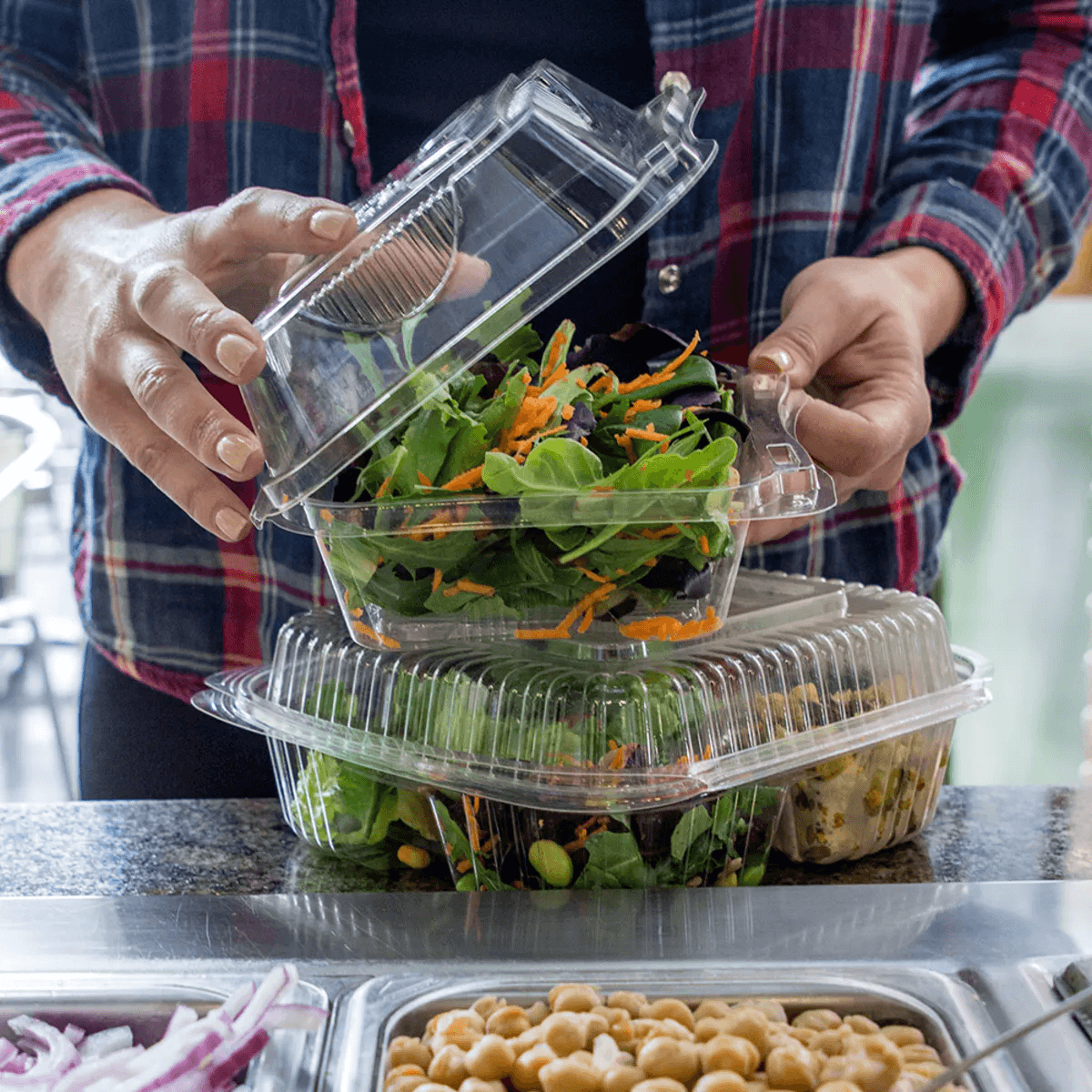
Using small salad bowls or sustainable takeout containers for individual servings instead of larger generic boxes can cut material use by up to 30% per meal, according to a recent Sustainable Packaging Coalition report. Selecting appropriately sized packaging products also helps reduce overall food packaging waste.
Plan Supplies Carefully for Events
Events and social gatherings can quickly generate unnecessary waste if an abundance of supplies is ordered. Carefully estimating attendance and planning individual portions can help ensure fewer unused plates, containers, and utensils end up in the trash.
For restaurants and caterers looking to reduce waste in food service, planning inventory and supply quantities ahead of time can make a significant difference. A good rule of thumb is to plan for 10-15% more than expected when planning for an event. Doing so can reduce packaging waste and save money while still ensuring everyone is served.
Buying foodservice packaging in bulk also reduces both shipping emissions and secondary packaging waste. Larger supply orders typically require fewer boxes, less filler material, and fewer deliveries, helping reduce the overall environmental footprint. For restaurants and offices with steady demand, bulk purchasing is cost-effective and kind to the environment.
Reduce Food Waste Through Better Storage
Believe it or not, food waste makes up nearly 24% of what ends up in U.S. landfills, according to the Environmental Protection Agency. That represents a considerable portion and much of it is preventable with more mindful practices.
With better storage and a more organized approach to your kitchen, it becomes easier to keep track of what you have, use ingredients before they spoil, and avoid overbuying. Labeling items, rotating older food to the front, and weekly meal planning can go a long way in reducing waste and making your routine more efficient (and healthy).
Dispose of Materials The Right Way
Sustainable packaging needs to be disposed of correctly to deliver its full benefit. When available, compostable products should be placed in compost bins so they can break down properly rather than entering landfill streams.
Clear signage, labeled bins, and simple instructions help staff and customers sort waste properly which further reduces landfill contributions. Businesses that actively compost and educate staff see a waste diversion increase of 20-40% according to recent case studies in the commercial foodservice industry.
Mixing compostable items with conventional plastics or placing non-compostable materials in compost bins can prevent entire loads from being processed correctly. Separating compost, recycling, and landfill bins makes it easier to avoid contamination and ensures everything ends up in the right place.
Educate Your Team & Others
The most effective waste reduction efforts happen when everyone is involved and working toward a shared goal. Providing guidance on how to compost, recycle, and reuse packaging ensures that products are disposed of responsibly every day.
Minor updates, like signage, training, or email reminders, can dramatically improve sorting accuracy. Studies show that clearly labeled compost bins increase proper disposal by up to 70% in office and food service environments.
Consistent changes in everyday habits can create a meaningful impact over time. By choosing eco-friendly food packaging, reducing excess materials, and disposing of products responsibly, businesses and individuals can take meaningful steps toward real sustainability.
Sustainability guides every step we take - from sourcing materials to ensuring our products return to the earth through composting. Every thoughtful choice today helps shape a better tomorrow.
Sources
1-https://www.epa.gov/facts-and-figures-about-materials-waste-and-recycling/national-overview-facts-and-figures-materials
2-https://www.forbes.com/sites/jamiehailstone/2024/04/19/new-research-sheds-light-on-how-compostable-packaging-breaks-down/?utm_source=chatgpt.com
4- U.S. Environmental Protection Agency (EPA). From Field to Bin: The Environmental Impacts of U.S. Food Waste Management Pathways.
https://www.epa.gov/land-research/field-bin-environmental-impacts-us-food-waste-management-pathways
5- Illinois Environmental Protection Agency. Food Donation and Composting Program Case Study: The Lenox Hotel.
6- University of British Columbia behavioral research, summarized in ScienceDaily: Making bins more convenient boosts recycling and composting rates.