Key Takeaways
Certification is non-negotiable. Packaging that says "compostable" without a third-party certification logo (BPI, TUV, CMA, NSF) will be turned away at most facilities, no exceptions.
Not all facilities accept packaging. Access to a composting program that accepts compostable packaging in addition to food waste is limited. This means that even certified products need the right drop-off, not just any drop-off.
Lookalike plastic is the #1 reason facilities reject loads. Of composters that do not accept compostable packaging, 78% cite the main reason as confusion between conventional plastic packaging and compostable versions.
The packaging itself usually isn't the problem. Most certified compostable packaging does break down properly when it reaches a real composting facility. A 2024 field study of 10 U.S. composters found that 8 out of the 9 that actually accepted packaging had no detectable trace of certified compostable packaging in their finished compost.
Why Your Compostable Food Packaging Was Rejected at the Drop-Off (And How to Avoid It Next Time)
You did everything right: You switched your business to compostable cups, plates, and containers. You collected them separately from your regular trash. You drove them to the drop-off. And then - it was rejected.
If this happened to you, you're not alone, and it's not your fault. The system is more complicated than anyone tells you when you're purchasing, and a few fixable gaps between your packaging and your facility are almost always the culprit.
Here's exactly what went wrong, and what to do differently next time.
The Honest Truth About Composting Infrastructure Right Now
Before getting into the specific rejection reasons, it helps to understand where the U.S. composting system currently stands.
Access to composting programs has grown by 33% since 2020. That's real progress. But it also means some still don’t have convenient composting access. Most have access to food-waste-only programs, where packaging of any kind is turned away.
That gap is at the root of most rejection stories.
The 4 Reasons Your Compostable Packaging Got Rejected
1. The Packaging Wasn't Actually Certified
This is the most common (and most preventable) reason. A lot of products on the market are marketed as "eco-friendly," "plant-based," or even "compostable" without carrying a verified third-party certification. In most U.S. states, manufacturers are free to label products as compostable without meeting any standards. That means a green leaf icon and the word "compostable" on a package means nothing to a composting facility unless it's backed by independent testing.
What facilities actually look for is the BPI, CMA, TUV, or NSF certification logo or a verified claim to ASTM D6400 or ASTM D6868 compliance.
Here's how those work:
ASTM D6400 is the U.S. standard specification for labeling plastics designed to be composted in industrial and municipal composting facilities. It defines the criteria a product must pass before it can be labeled "compostable." ASTM D6400 compostable is an important term to understand.
Certified compostable means a product has passed testing under ASTM D6400 (for plastics) or ASTM D6868 (for coated paper and fiber substrates), covering three criteria: biodegradation, disintegration, and eco-toxicity.
The certification process requires testing at approved laboratories, 100% ingredient transparency, and typically takes 90 to 180 days. Certification must be renewed every three years.
Municipalities and commercial composting facilities increasingly require certification specifically - not just a claim of ASTM compliance. If you're in a jurisdiction with organic waste mandates, your compostable packaging often needs a certification logo to be accepted in commercial composting streams.
The fix: Before purchasing, look for a certification logo or a specific ASTM standard number printed on the packaging. Not a vague green claim - an actual certification mark.
2. Your Drop-Off Doesn't Accept Packaging - Just Food Scraps
Finding a composting drop-off location is only step one. The harder question is: what does that specific facility actually accept?
Approximately 145 full-scale compost facilities in the U.S. now accept food waste and some forms of food-contact compostable packaging. That's a small number relative to the size of the country, and many more facilities only process yard trimmings and food scraps. Meaning no packaging of any kind, certified or not.
Of facilities reporting on compostable packaging acceptance, food-soiled paper and pizza boxes are the most widely accepted, taken by 83% of facilities. Plastic-based items, like PLA cups and cutlery, are far more restricted, even when certified.
The fix: Call or email your composting facility before showing up. Ask specifically: "Do you accept certified food-contact compostable packaging?" Don't assume food scraps acceptance equals packaging acceptance. Using this Find a Composter tool and visiting your local municipality's waste management page are good starting points.
3. Your Load Was Contaminated by Non-Certified Items
Composting facilities operate on tight margins. Of facilities that do not accept compostable packaging, 78% cited contamination from lookalike single-use plastic packaging as the main reason. And it's not just facilities that already reject packaging - research shows that 85% of composters' contamination stems from conventional rigid and flexible plastics.
What this means in practice: if one plastic fork or non-certified container ends up mixed into your compostable packaging haul, a facility may reject the entire load. Their sorting systems often can't tell certified compostable packaging apart from conventional plastic and mechanical sorting systems still can't reliably distinguish between conventional plastic and compostable packaging.
Of the 145 composting facilities surveyed, 45 have a zero-tolerance policy for contamination, any load with contamination is automatically rejected. A further 66 require less than 5% contamination.
The fix: Keep your compostable stream strictly separated from day one. Train staff to sort by packaging type, not just by a general "eco-friendly" assumption. Post clear visual guides near bins showing which specific items are certified for composting and which are not. If you're in food service, your entire front-of-house program needs to use a consistent certified line - mixing one non-certified product into the stream puts everything at risk.
4. Your Certified Packaging Looks Too Much Like Regular Plastic
This is the trickiest rejection reason, because there's nothing wrong with the packaging itself - it's a visual identification problem.
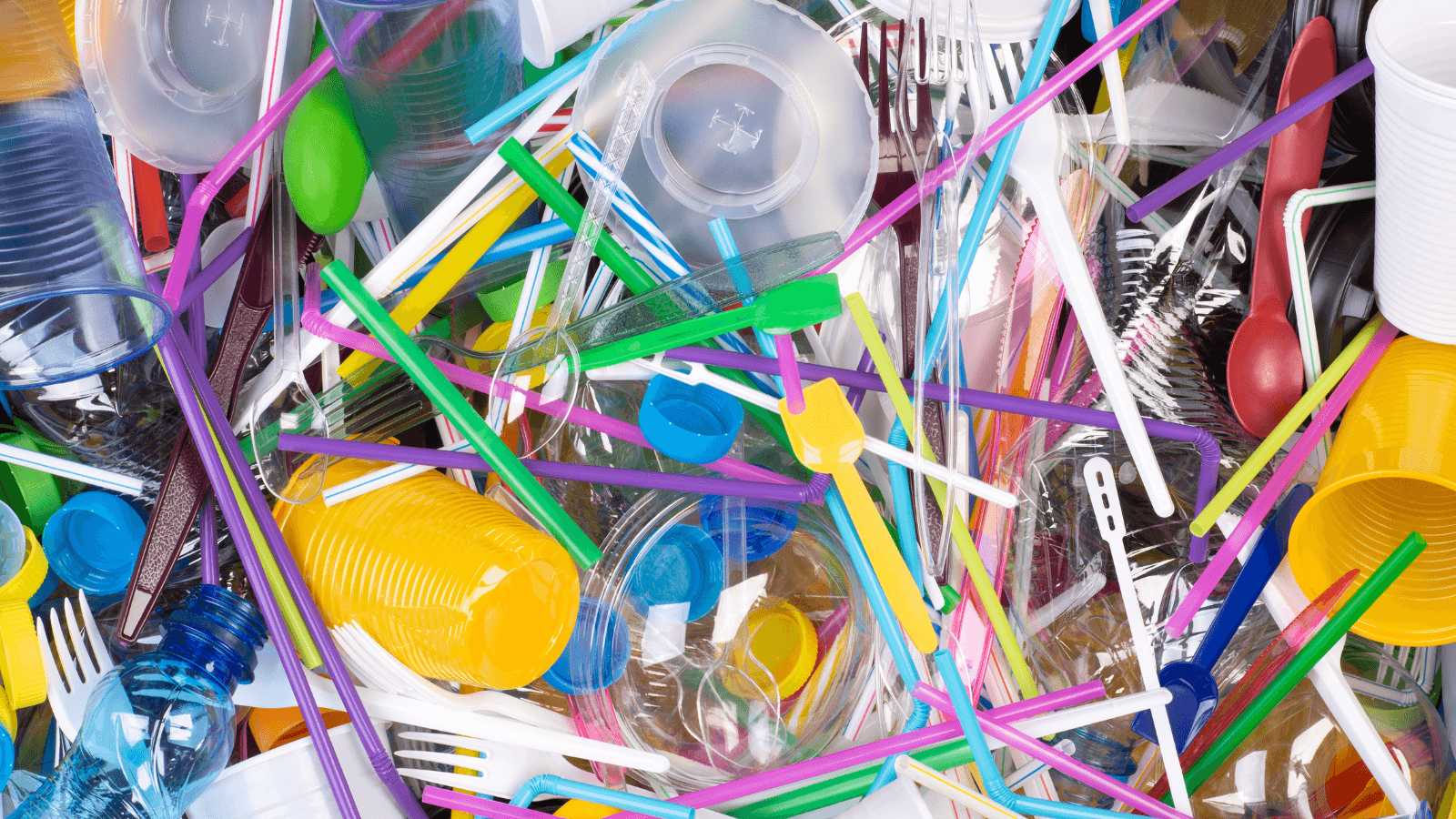
Many facilities struggle with contamination from "look-alike" food serviceware items that appear identical to compostable packaging. Composters must decide whether to allow the packaging through their process, assuming it is compostable, or remove it as a contaminant, assuming it is not.
To protect the integrity of their finished compost product, many facilities err on the side of rejection.
The fix: Choose packaging with clear, visible certification markings on the item itself, not just on the outer case. A certification logo or other markings printed directly on a cup or lid gives facility operators a clear signal. It also helps train your customers and staff, reducing the chance that the item ends up in the wrong bin.
What Actually Happens When Certified Packaging Reaches the Right Facility?
Here's the encouraging part, and it's worth saying plainly: certified compostable packaging works when the system works.
The Composting Consortium conducted the largest known singular field test of its kind in North America, testing more than 23,000 certified compostable packaging units across 10 commercial composting facilities and six composting technologies.
The data revealed that certified food-contact compostable packaging breaks down successfully at commercial composting facilities that meet reasonable operating parameters.
The infrastructure gap is real and worth being honest about. But it's closing. A 9% increase in acceptance pathways for compostable packaging has been recorded based on BioCycle's national food waste collection access and composting infrastructure surveys. The trajectory is in the right direction and businesses that build the right habits now will be well-positioned as their local infrastructure catches up.
Your Pre-Purchase Checklist for Drop-Off Success
Before committing to a compostable packaging line, work through these four questions:
Does my local facility accept food-contact compostable packaging (not just food scraps)?
Does the packaging I'm buying carry a certified logo or a specific ASTM D6400/D6868 marking on the item itself?
Can I keep my compostable stream 100% separated from non-certified items at every touchpoint?
Is my facility aware of what they're receiving and have I checked in with them directly?
If you can answer yes to all four, you're in good shape. If not, identify which gap to close first (hint: usually it's #1 or #2).
Bottom Line
Compostable packaging is a real, proven tool for diverting organic waste from landfills; but it only works when the right packaging meets the right facility. The rejection you experienced wasn't a sign that the switch wasn't worth making. It was a signal that one link in the chain broke: a missing certification, a facility that wasn't built for packaging, a single non-certified item in the mix, or a coverage gap in your area. Every one of those is fixable. Verify the certification before you buy. Find your facility before you haul. Train your team before the bins fill up. When those three things line up, certified compostable packaging does exactly what it promises and the infrastructure to make that possible keeps expanding. Stay the course!
Frequently Asked Questions About Why Your Compostable Packaging Was Rejected at the Drop-Off
Can I compost packaging at home?Most products certified to ASTM D6400 or D6868 are designed for commercial composting conditions meaning higher temperatures, specific moisture levels, and active management. Home compost bins rarely reach the temperatures needed to break down packaging within a reasonable timeframe. Check the product specifically: some items (usually uncoated fiber products) are approved for home compost, but most certified serviceware is not.
What's the difference between certified and "ASTM-compliant"?
Think of it this way: ASTM wrote the exam, and certifications are the proctors that grades it and issues the diploma. A product can be tested to ASTM D6400 criteria in a lab, but without third-party certification, there's no independent verification that it actually passed. When a facility requires certification, a self-declared "ASTM-compliant" label won't be enough.Does compostable packaging contain PFAS? Certified Compostable Products do not contain any added PFAS and must meet stringent fluorine testing standards.
What do I do if there's no certified composting facility near me? This is a genuinely common situation, and it's worth being direct about: if there's no local facility that accepts certified food-contact compostable packaging, that packaging is likely to end up in a landfill. In that scenario, recyclable packaging may be the more practical choice for your waste stream. Request free samples to try before committing.
How do I find a composting facility that accepts food-contact packaging? Start with this tool and your municipal waste management site. When you contact a facility, ask specifically: "Do you accept certified food-contact compostable packaging, including cups and serviceware?" Getting a specific yes — not a general "we take compostables" — is what you're after.
Why do some facilities accept paper compostables but not plastic ones like PLA cups? Compostable plastics look like conventional plastics. At scale, this guarantees contamination and sorting failure, so facilities that have had trouble with plastic-lookalike contamination often restrict plastic-based items while still accepting fiber, sugarcane, or paper-based packaging, which is visually distinguishable from conventional materials.
Sources
1- SPC (Sustainable Packaging Coalition), New SPC Research Shows U.S. Increase in Composting Access,
https://sustainablepackaging.org/2025/10/01/new-composting-access-data/
2- BioCycle & Composting Consortium, BioCycle Nationwide Survey: Full-Scale Food Waste Composting Infrastructure in the U.S., https://www.biocycle.net/us-food-waste-composting-infrastructure/
3- Composting Consortium / Closed Loop Partners, Don't Spoil the Soil: The Challenge of Contamination at Composting Sites, https://www.closedlooppartners.com/composting-consortium-reveals-contamination-rates/
4- Composting Consortium / Closed Loop Partners, Breaking It Down: The Realities of Compostable Packaging Disintegration in Composting Systems,https://www.closedlooppartners.com/does-compostable-packaging-actually-break-down/
5- BioCycle, Compostable Packaging Acceptance Up 9% Since 2023,https://www.closedlooppartners.com/does-compostable-packaging-actually-break-down/