Key Takeaways
Food waste is a major climate issue. Food waste accounts for nearly 24% of material sent to U.S. landfills and is responsible for an estimated 58% of landfill methane emissions.
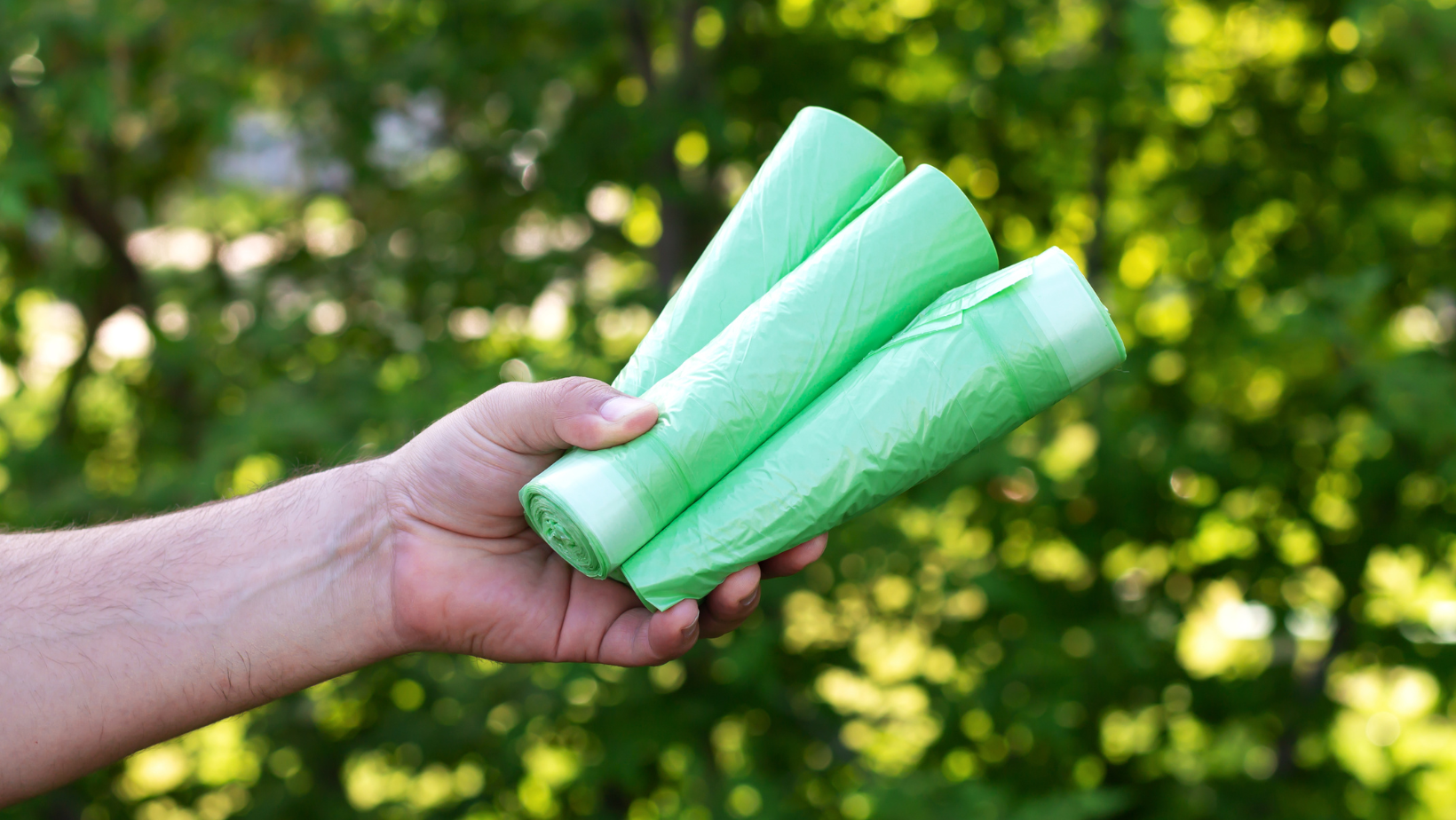
Compostable trash bags are designed to break down in composting environments, not landfills. Certified bags help support commercial composting systems and organic waste diversion programs if protocol is followed.
Certification really does matter. Look for standards like ASTM D6400 and third-party certifications that verify a product can compost properly under industrial conditions when purchasing certified compostable bags.
The necessary infrastructure is still growing around the country. Compostable products only work as intended when communities and facilities accept them, making education and proper disposal of eco-friendly trash bags critical.
Compostable Trash Bags: What They Are, How They Work, and Why They Matter
As businesses and consumers look for practical ways to reduce landfill waste, compostable trash bags have become an increasingly popular alternative to traditional plastic liners. These bags can help support food scrap collection programs and reduce contamination in compost streams, but only when used correctly.
Real sustainability goes beyond replacing plastic in our everyday lives. It’s also about choosing products that align with composting systems and help divert organic waste from our landfills.
What Are Compostable Trash Bags?
Compostable trash bags are made from plant-based materials or compostable biopolymers designed to break down into natural elements in a controlled composting environment.Unlike traditional plastic bags, compostable liners are intended to decompose into carbon dioxide, water, biomass, and organic matter without leaving behind toxic residue.
Most commercial compostable bags are designed for use in industrial composting facilities only - where temperature, moisture, and oxygen levels are carefully controlled. This is important because many products labeled “biodegradable” may not actually break down fully in landfill conditions.
When choosing compostable liners, you should look for recognized certifications such as:
ASTM D6400
ASTM D6868
BPI Certification
These standards help verify that these products are tested for compostability and disintegration under typical commercial composting conditions.
2 Main Reasons Why Compostable Trash Bags Matter
1. Landfills Generate Significant Methane Emissions
According to the EPA, municipal solid waste landfills are the third-largest source of human-related methane emissions in the United States. Food waste alone is responsible for an estimated 58% of landfill methane emissions. The EPA reports that food is the most common material sent to U.S. landfills, making up approximately 24.1% of municipal solid waste. Elevated methane levels are concerning because it traps significantly more heat in the atmosphere than carbon dioxide over a shorter timeframe.
Separating food scraps and organic waste from your regular trash can support efforts that help keep compostable material out of landfills.
2. Composting Returns Nutrients Back to Soil
Composting is essentially nature’s own recycling system. Instead of trapping organic waste in anaerobic landfill conditions, composting transforms food scraps and organic materials into nutrient-rich soil amendments.
The EPA notes that composting helps:
Reduce landfill waste
Improve soil quality
Support local ecosystems
Return carbon and nutrients back into the soil
For commercial operations, compostable trash bags can make food scrap collection cleaner and easier for both staff and customers if they have the proper education and resources.
Compostable vs. Biodegradable - The Difference is Important
The terms “compostable” and “biodegradable” are often used interchangeably, but they are certainly not the same. Understanding the difference is important for businesses and consumers looking to make more environmentally responsible decisions.
While both types of materials are intended to break down over time - the conditions required, timeframe involved, and the end result vary greatly.
Compostable
A compostable product is specifically designed to break down within a defined timeframe under controlled conditions, and leave behind only non-toxic, natural material. Certified compostable products are tested to ensure they can safely decompose in commercial composting environments without producing harmful residue or microplastics.
Most compostable trash bags are intended for industrial composting facilities, where heat, oxygen, and moisture levels are carefully managed to accelerate decomposition.
In addition to breaking down effectively, compostable materials are designed to contribute to the creation of nutrient-rich compost that can help support healthier soil and agricultural systems.
Biodegradable*
Biodegradable simply means a material can eventually break down over time through natural processes. However, there is often no standardized timeframe or guarantee regarding how long decomposition will take or what materials may remain behind after the product breaks down.
Some biodegradable plastics may fragment into smaller pieces rather than fully decomposing, potentially contributing to microplastic pollution. In many cases, products labeled “biodegradable” can still for years depending on conditions such as temperature, sunlight exposure, and oxygen availability.
Because the term “biodegradable” is less regulated, it does not always mean that a product is environmentally preferable or suitable for composting systems.That’s why certifications matter. Products labeled “compostable” without third-party verification may not perform as expected in real-world composting systems.
*Green Paper Products does not sell any bags that are labeled or marketed as biodegradable.
Proper Disposal is Essential
One of the biggest misconceptions about eco-friendly trash bags is that they automatically solve waste issues no matter where they end up. In reality, compostable products need the right disposal pathway each and every time or it is a waste of effort.
If compostable trash bags are simply sent to a landfill, they might not break down properly due to lower than ideal oxygen conditions. Some industry experts warn that compostable materials that end up in landfills can still contribute to methane generation and emissions.
The necessary infrastructure is also still developing across the United States. While commercial composting access continues to expand across the nation, many municipalities and cities do not currently accept compostable packaging or trash liners.
For businesses, this means successful composting programs often depend on:
Clear signage
Employee education
Using certified products
Partnering with local compost haulers or facilities
4 Best Practices for Using Compostable Trash Bags
To maximize the environmental benefits of compostable garbage bags, both organizations and consumers should follow a few simple best practices. While switching to compostable products is a positive step, proper use and disposal are essential to ensuring these materials actually support long term efforts.
1. Verify Local Acceptance
Before purchasing commercial compostable bags, confirm that your local composting facility actually accepts compostable liners and foodservice packaging. Composting rules and accepted materials can vary significantly by city, county, and even waste haulers.
Some facilities accept all types of certified compostable products, while others only allow food waste and yard trimmings. Checking local guidelines ahead of time can help avoid contamination issues and ensure materials are processed correctly.
Businesses should also work closely with waste management partners to understand:
Accepted compostable materials
Bin contamination requirements
Pickup and sorting procedures
Local composting regulations
Taking these steps upfront can improve program efficiency and help prevent compostable materials from ending up in landfills.
2. Choose Certified Products
Not all products marketed as “green” or “biodegradable” meet true compostability standards. When purchasing, look for trusted certifications such as:
ASTM D6400
ASTM D6868
BPI Certification
These certifications help verify that products are designed to break down properly in composting environments without leaving behind harmful residue or microplastics.
Choosing certified products also helps composting facilities process materials more confidently and reduces confusion. Using clearly labeled, certified compostable liners can strengthen the effectiveness of your sustainability program and support long-term waste reduction.
3. Use Compostable Bags for Organic Waste Streams
Compostable trash bags are most effective when used specifically for collecting organic waste. They are specifically designed to support food scrap diversion and composting programs vs. general landfill waste collection.
Ideal applications include:
Food scraps & compost bins at home and in your organization
Commercial kitchen prep waste
Cafeteria collection programs
Breakroom food waste bins
Event and stadium foodservice collection
School and university dining halls
Using compostable liners in designated organic waste streams can help improve cleanliness, simplify collection, and encourage higher participation. In commercial environments, compostable bags can also help reduce odors and make transporting food waste more manageable for staff.
For best results, organizations should clearly separate compost, recycling, and landfill bins to minimize contamination and improve sorting accuracy.
4. Educate Staff, Customers, and Family Members
Contamination remains one of the biggest challenges facing composting programs today. Even a small amount of traditional plastic, metal, or non-compostable items can disrupt the composting process and increase processing costs.
Businesses and organizations should provide:
Clear signage above bins
Simple visual examples of accepted materials
Employee training for waste sorting procedures
Customer-facing instructions in dining or public spaces
At home, educating family members about what belongs in compost bins can improve composting success and reduce accidental contamination.
Consistent communication, ongoing education, and strict labeling help build better habits over time and make composting programs significantly more effective. When people understand how and where to properly dispose of these bags, the environmental impact of composting efforts becomes much more meaningful.
The Future of Compostable Waste Solutions
As homes and businesses continue investing in organic recycling programs, demand for eco-friendly trash bags and compostable foodservice products is expected to grow.
At the same time, the industry continues working toward:
Better composting infrastructure
More consistent labeling standards
Increased access to commercial composting
Reduced contamination in compost streams
Compostable garbage bags are not a perfect standalone solution. When paired with effective composting systems, they can play a crucial role in reducing overall landfill waste and supporting more sustainable waste management.
The key is choosing certified compostable bags and ensuring they end up in the proper composting stream.
As sustainability initiatives continue to evolve, businesses and consumers alike have an opportunity to make more informed purchasing decisions that support long-term environmental goals. By incorporating compostable trash bags into effective waste diversion programs, we can all take meaningful steps toward reducing our environmental impact while contributing to a cleaner, more circular economy in the future.
Sources
1 - Quantifying Methane Emissions from Landfilled Food Waste, https://www.epa.gov/land-research/quantifying-methane-emissions-landfilled-food-waste
2 - EPA Composting, https://www.epa.gov/sustainable-management-food/composting
3 - The Guardian, https://www.theguardian.com/environment/2024/dec/01/australia-plastic-contamination-food-garden-waste-compostable-coffee-cups