Key Takeaways
Sizing matters more than you think. Matching cup size to your menu - not just grabbing the most popular size - prevents leaks, lid misfits, and wasted product.
"Compostable" is not one-size-fits-all. Look for compostable paper cups certified to ASTM D6868 or ASTM D6400 standards; that's what separates a true compostable cup from a vague marketing claim.
Lids and sleeves need to match. A compostable cup paired with a non-compostable lid defeats the purpose at the point of disposal; make sure to check the compatibility of both before you order.
Order a sample pack first. Before committing to a case quantity for the entire season, try a few sizes and different styles in your actual operation to catch fit issues before they become inventory headaches.
Hot Cup Season Is Here: How to Choose the Right Compostable Cup for Your Coffee Shop
Based on order data from hundreds of thousands of transactions across the US, hot drinks reclaim their position as the most-ordered beverage type around mid-September and by November, they make up about 70% of all drink orders. If your cold cup stock still looks the same as it did in July, now is the time to get ahead of this seasonal shift.
For cafés and coffee shops that have already made the move to compostable serviceware, or are thinking about it, fall is the perfect moment to evaluate what's working and fill in any gaps. The right compostable coffee cups aren’t just about checking an eco-friendly box - it affects your customer’s experience, lid and sleeve compatibility, and whether your composting setup actually closes the loop.
This guide walks through exactly what to look for, size by size and material by material, so you can head into the busy season with confidence.
Why Autumn Is the Right Time to Audit Your Cup Setup
According to the National Coffee Association's January 2026 survey, 78% of coffee orders were served hot. That shift happens fast. By the time October arrives, you're likely already seeing the tilt toward lattes, Americanos, drip coffee, and hot teas - and all of those drinks need a cup that can handle heat without compromising hold or structure.
The compostable coffee cup market stood at $1.5 billion in 2024, and demand is only growing as more operators make the switch. Nearly 40% of consumers are now actively seeking eco-friendly coffee cups, which means your packaging is increasingly part of how customers evaluate you as a business overall and make their purchasing decisions.
Getting your cup setup right in October puts you in a good position for the two biggest months of the year: November and December.
What Actually Makes a Hot Cup "Compostable"?
This is the question worth answering, because not all "eco-friendly" cups are created equal.
Most compostable hot cups are made from a kraft paper exterior with a plant-based lining - typically PLA (polylactic acid, derived from corn starch) - instead of the traditional petroleum-based polyethylene coating. The PLA lining is what allows the cup to break down in a commercial composting facility.
The certifications to look for:
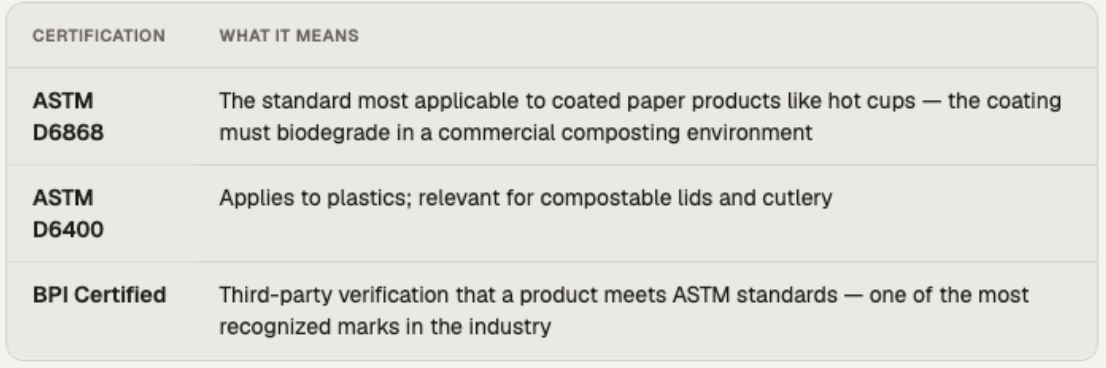
One important note: Compostable cups require a commercial composting facility to break down properly. Home compost bins typically don't get hot enough. Be transparent with your customers about this since it builds trust, and aligns with what responsible disposal actually looks like.
How to Choose the Right Size for Your Menu
Sizing isn't just about volume - it's about lid compatibility, fill ratios, and how your drinks look in the cup. A 12-oz cup filled to 10-oz looks and feels right. A 20- oz cup with the same drink feels like a mistake.
Here's a practical guide by drink type:
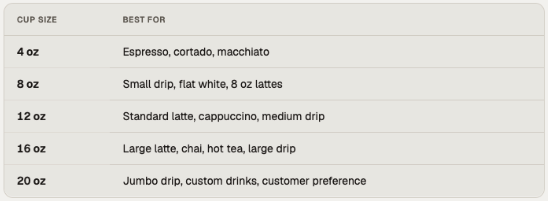
The practical rule: Order one size up from your smallest item and one size down from your largest. If your menu has a 12-oz and a 16-oz latte, you likely don't need a 20-oz hot cup. Eliminating extra SKUs simplifies ordering, storage, and lid inventory.
Compostable Lids: Don't Skip This Step
Your cup can be fully certified and still end up in the wrong waste stream if the lid isn't compostable too. Compostable cup lids compatibility is one of the most common pain points operators run into when transitioning to sustainable serviceware.
What to look for in a compostable lid:
CPLA (Crystallized PLA): The most common material for compostable hot cup lids. Crystallized to handle temperatures up to around 185°F without warping. Reliable for lattes, drip coffee, and hot teas.
Molded fiber lids: An emerging option made from plant fiber. Good compostability profile; check heat tolerance specs before using these with very hot drinks.
Matching diameter: Hot cups come in standard rim sizes (typically 79mm, 83mm, or 90mm). Always confirm the lid diameter matches your cup before ordering a season's worth.
Pro tip: Avoid mixing certified compostable cups with standard plastic lids. At the disposal stage, a customer or staff member has no easy way to sort them and a non-compostable lid in a compost bin can contaminate the entire batch.
Do You Need Hot Cup Sleeves?
The short answer is yes - and here's why it matters beyond just customer comfort. A hot cup sleeve protects hands from heat, reduces the need for double-cupping (which doubles your material use and cost), and gives you a clean, professional presentation. For compostable programs, kraft paper sleeves are the right match as they're compostable alongside the cup and don't require any sorting.
When sleeves are worth it:
Your hot drinks regularly top 160°F
You have a high percentage of carry-out or drive-through orders
You want to avoid the waste and added cost of double-cupping
When you might skip them:
You primarily use double-wall cups (which insulate on their own)
Your café is mostly dine-in with short drink-to-hand times
Single Wall vs. Double Wall: Which Should You Order?
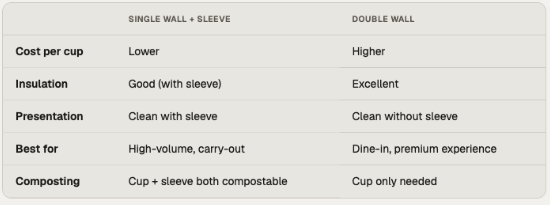
Additional guidance: For most independent cafés balancing cost and sustainability, single wall cups paired with kraft sleeves hit a good balance. If you're running a higher-end sit-down experience or want a cleaner look with no sleeve, double wall is usually worth the modest price increase.
How to Order Smarter This Season
A few practical tips before you place your fall order:
Try before you commit to a case. It's the right way to check lid fit, cup feel, and whether the size works for your actual drinks before buying in bulk.
Consolidate your SKUs. If you can cover your full menu with two cup sizes instead of three, you'll simplify storage, reduce reorder frequency, and lower the risk of running out of the wrong size mid-rush.
Check your composting setup. Compostable cups only perform as intended when they reach a commercial composting facility. Use this Find a Composter tool to locate one near you, and consider putting a simple sorting guide near your waste station for customers.
Order packs if you're testing, cases if you're scaling. Packs are great for smaller shops or seasonal testin while cases reduce per-unit cost for higher-volume operations.
The Bottom Line
Getting your cup setup right isn't just a logistics task - it's a signal to your customers about how you operate and what you prioritize. The right compostable hot cup, matched with the right lid, sleeve, and composting infrastructure, closes a loop that starts the moment someone orders and ends well past the trash can.
October is the right time to get this sorted out: before the holiday rush, before you're reordering in a panic, and while there's still room to test a few options before committing to a large order. Start with your menu, work backward to the sizes and specs you actually need, and try before you buy. The right setup is simpler than it sounds - it just takes a few deliberate decisions upfront.
Frequently Asked Questions About How to Choose the Right Compostable Cup for Your Coffee Shop
Are compostable hot cups safe for all hot beverages? Yes, provided the cup is rated for hot use. Look for cups with a PLA or plant-based lining certified to ASTM D6868. These are designed to handle standard hot beverage temperatures (typically up to 185-200°F) without leaking or structural breakdown. Always check the product specs for your specific use case.
What's the difference between compostable and recyclable hot cups? Compostable hot cups are designed to break down in a commercial composting facility, returning nutrients to the soil. Recyclable cups, typically those with a water-based or PE coating, go into recycling streams, though local facility acceptance varies. Neither is inherently "better"; the right choice depends on what end-of-life infrastructure your business and your customers have access to.
Do compostable cups cost more than regular cups? Generally, yes but the gap has narrowed significantly as demand has grown. The compostable coffee cup market stood at $1.5 billion in 2024 and is projected to reach $3.2 billion by 2033, This means more suppliers, more competition, and more price parity over time. For most cafés, the per-cup cost difference is modest, especially when factoring in the value of offering something customers are increasingly noticing and appreciating.
Can I compost these cups at home? Most ASTM D6868-certified hot cups require a commercial composting facility to break down correctly. Home compost piles typically don't sustain the temperatures needed for the lining to fully decompose. Use this Find a Composter tool to locate a certified facility near you.
Do compostable cups work with standard lids and sleeves? The cup itself may be compostable, but lids and sleeves need to match, both for fit and for end-of-life disposal. Look for CPLA or molded fiber lids certified to ASTM D6400, and kraft paper sleeves. Mixing certified compostable cups with standard plastic lids creates a sorting nightmare at the composting stage.
How do I find a composting facility near my café? This Find a Composter tool makes it easy to search by ZIP code for certified commercial composting facilities that accept food service compostables. It's a good resource to share with your customers, too.
Sources
1- When Coffee Shops Should Promote Seasonal Drinks Based on the Data,
https://blog.joe.coffee/when-coffee-shops-should-promote-seasonal-drinks-based-on-the-data
2- 7 Signs of America's Fall Iced-to-Hot Coffee Switcheroo, https://www.yahoo.com/lifestyle/articles/7-signs-americas-fall-iced-230000120.html
3- Compostable Coffee Cup Market Size, Market Insights, Growth & Forecast 2033, https://www.verifiedmarketreports.com/product/compostable-coffee-cup-market/
4- Coffee Cups Market Size & Share Analysis,https://www.reanin.com/reports/coffee-cups-market